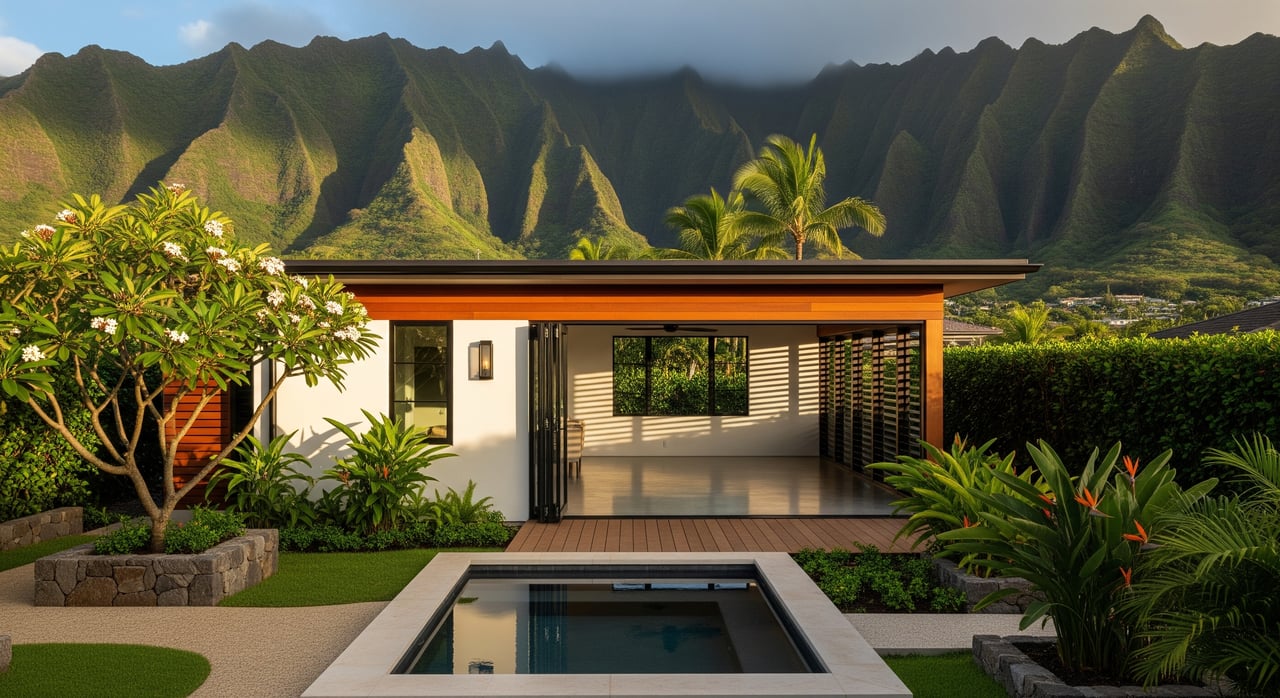
Thinking about adding an ohana unit to your Kaneohe property? You are not alone. Many Windward owners explore accessory dwellings to support family, caregiving, or steady long‑term rental income. This guide walks you through what matters most in Kaneohe, from zoning and overlays to utilities, permits, and rental rules, so you can plan with confidence. Let’s dive in.
What is an ohana unit?
In Honolulu County, “ohana unit” is the local term historically used for an accessory residence on the same lot as a primary single‑family home. Today these are broadly referred to as accessory dwelling units, or ADUs. The City and County of Honolulu Department of Planning and Permitting (DPP) sets the definitions and rules. Typical goals include multi‑generational living or long‑term rental income, while short‑term vacation rentals are separately regulated and often restricted in residential zones.
Start with zoning and eligibility
Before you sketch a floor plan, confirm that your parcel allows an ohana unit. Zoning rules and overlays control whether an ADU is permitted, how large it can be, and where it can sit on the lot. In Kaneohe, neighborhood conditions vary, so your parcel’s designation matters.
Key rules to confirm with DPP
- Zoning designation and whether accessory dwellings are allowed on your lot type.
- Owner‑occupancy requirements that may apply once an ADU is created.
- Maximum number of dwelling units allowed per lot and whether only one ADU is permitted.
- Floor area and bedroom limits for the ADU.
- Setbacks, height, lot coverage, and floor area ratio that affect placement and size.
- Access and egress standards, including separate entrance and fire egress.
These items determine basic feasibility. Clarifying them early helps you avoid redesigns later in the process.
Coastal, flood, and slope overlays in Kaneohe
Kaneohe blends coastal, bayfront, and hillside parcels, so overlays can influence design and permitting. A quick due diligence pass up front can save months.
- Shoreline setback and Special Management Area rules can trigger additional permits for properties near Kaneohe Bay and coastal edges.
- Floodplain and tsunami evacuation overlays, plus FEMA flood mapping, may add construction or elevation requirements.
- Conservation districts or historic areas can restrict new structures or require more reviews.
- Steep slopes common in Windward neighborhoods often require geotechnical reports and specialized foundations.
If your parcel sits in one of these areas, expect a longer timeline and more coordination during plan review.
Parking and access
Honolulu’s zoning code sets parking requirements for accessory dwellings. Many sites must provide at least one additional off‑street stall for an ADU, although reductions can apply based on zoning, ADU size, or proximity to transit. Always confirm the standard for your exact parcel with DPP.
On tight or sloped Kaneohe lots, providing a new stall can be one of the costlier tasks. Grading, retaining walls, driveway widening, and turning clearances add complexity. Work with your designer early to plan a stall that meets code and fits your site.
Water, sewer, and power
Utility checks can make or break a project budget. Contact each provider early to verify capacity, connection options, and potential fees.
Water service
- Coordinate with the Honolulu Board of Water Supply to confirm existing meter size and capacity.
- Ask whether a new meter or a meter upgrade is required for the ADU.
- Request estimated costs and timelines for meter work so you can build accurate budgets.
Sewer or on‑site wastewater
- Verify if the property is on municipal sewer or uses an on‑site cesspool or septic system.
- If you have a cesspool, ADU construction can trigger upgrade or conversion rules. Coordinate with the City’s Department of Environmental Services on sewer availability and connection requirements, and review State Department of Health guidance for cesspool conversion programs.
- Confirm any sewer connection fees and whether capacity is available in your area.
Electric and communications
Hawaiian Electric can advise on service capacity, panel upgrades, and meter options. Some owners prefer a separate meter for billing. In certain cases, a separate meter or service upgrade may be required.
Check broadband options and pole locations. Reliable internet increases rental appeal and quality of life for occupants.
Stormwater, grading, and soils
New construction often triggers stormwater management requirements and erosion control permits. If your ADU needs cuts, fills, or retaining walls, expect separate grading and structural permits. On hillside lots, a geotechnical report is commonly required and can influence foundation type, wall design, and building placement. These items add cost but protect your structure and neighboring properties.
Permitting path in Honolulu
You can streamline the process by following a clear sequence and confirming the big issues up front.
Recommended first move
Request a pre‑application meeting with DPP and contact the utilities for early guidance. This step helps you spot triggers like shoreline or SMA permits, sewer extensions, meter upgrades, or panel capacity issues before you invest in full drawings.
Typical steps
- Verify zoning, overlays, and utility availability for your parcel.
- Prepare a basic site plan, floor plan, and elevations to review with DPP and utilities. Consider hiring a local architect or designer.
- If needed, apply for discretionary approvals first, such as shoreline or SMA permits, variances, or special uses.
- Submit your building permit set to DPP, including structural calculations and energy compliance documents.
- Coordinate utility applications, such as water meter work, sewer connections, and electric service upgrades or meter splits.
- Complete plan review cycles and respond to corrections.
- Build with required inspections for foundation, framing, trades, and final.
- Obtain final approval and a Certificate of Occupancy before move‑in or rental.
Timing, costs, and common surprises
Straightforward projects on flat lots with existing utilities tend to move faster. If your ADU needs shoreline or SMA approvals, major grading, a cesspool conversion, or service upgrades, expect a longer schedule. It is wise to build contingency time into your plan since reviews, corrections, and utility work can extend the timeline to many months or more than a year.
Fees to anticipate include building permit and plan review fees, sewer connection charges, water meter fees, and potential development or impact fees. Ask each agency for current schedules so you can budget accurately.
Legal and rental considerations
If you plan to rent your ohana unit, review the rules before you design.
- Short‑term vacation rentals have strict limits in Honolulu County and many residential parcels are not eligible. Confirm local requirements and avoid noncompliant advertising or bookings.
- For long‑term rentals, register and pay applicable Hawaii taxes on rental income. Long‑term and short‑term rentals have different tax treatments. Consult a tax professional to stay compliant.
- Review owner‑occupancy rules associated with ADUs. These can affect your long‑term plans and resale strategy.
Insurance, financing, and taxes
Adding an ADU changes your risk profile and may affect your financing and tax picture.
- Insurance: Notify your carrier and confirm coverage for an additional dwelling, including fire and liability. If you rent the unit, ask about landlord coverage.
- Financing: Lenders differ on how they treat ADU rental income and construction financing. Speak with a lender early to understand qualifying and documentation.
- Property taxes: An ADU typically increases assessed value. Contact the City’s Real Property Assessment Division to estimate how your tax bill could change.
Kaneohe homeowner checklist
Use this checklist to stay organized as you evaluate an ohana unit.
With DPP
- Confirm zoning, whether an ADU is allowed, and any owner‑occupancy rule.
- Verify ADU size limits, bedroom caps, setbacks, height, lot coverage, and floor area rules.
- Ask about parking requirements for your parcel and whether reductions apply.
- Check for shoreline, SMA, flood, tsunami, conservation, or historic overlays.
- Confirm permit submittal requirements and whether a pre‑application meeting is recommended.
With Board of Water Supply
- Confirm existing meter size and capacity.
- Ask whether a new or larger meter is needed and request cost and timeline estimates.
With Environmental Services
- Verify sewer availability and connection rules.
- If you have a cesspool or septic system, confirm upgrade triggers and Department of Health requirements.
With Hawaiian Electric
- Confirm service capacity and whether your panel can support the ADU.
- Ask about separate meters, upgrade timelines, and costs.
Other due diligence
- Review FEMA flood maps and local flood or tsunami overlays for your parcel.
- Check HOA CC&Rs for any restrictions on additional dwellings or rentals.
- Locate easements that could limit building locations.
- Consider engaging a local architect, contractor, and geotechnical engineer for sloped or coastal sites.
Your next steps
If an ohana unit fits your goals, start with a quick zoning and utility check, then line up a designer who knows Honolulu code and Kaneohe terrain. From there, a DPP pre‑application meeting and early conversations with BWS, Environmental Services, and Hawaiian Electric will set a realistic timeline and budget. We are here to help you evaluate feasibility, rental potential, and resale impact so you can move forward with clarity.
Ready to explore an ohana unit on your property or find a Kaneohe home with ADU potential? Schedule a free consultation with Jordan Toohey. We will walk you through options, connect you with trusted local pros, and help you plan the right path for your goals.
FAQs
Can I build an ohana and rent it short term in Kaneohe?
- Honolulu County restricts short‑term vacation rentals in many residential zones, and parcels with ADUs are often ineligible. Confirm rules before planning or marketing any short‑term stays.
Do I need a separate water or electric meter for an ADU?
- Possibly. It depends on service capacity and utility rules. The Board of Water Supply and Hawaiian Electric can confirm if you need a new or upgraded meter or panel.
What if my property has a cesspool?
- An ADU may trigger wastewater upgrades. Coordinate with Environmental Services and review State Department of Health guidance on cesspool conversion to understand costs and timelines.
How long does ADU permitting take in Kaneohe?
- Simple, compliant projects move faster. If your site needs shoreline or SMA approvals, grading, cesspool conversion, or utility upgrades, plan for many months to a year or more.
Will an ohana unit increase my property taxes?
- Likely. An ADU typically increases assessed value. Contact the City’s Real Property Assessment Division for an estimate of tax impacts.